


 By: Tomáš Gajdoš
I have been taking groups to Greece for nine years, and for the first three of them I ate badly. Not unpleasantly — badly. I stuck to what I knew from home: gyros, moussaka, Greek salad, calamari. It worked, in the way that eating dumplings at a roadside stop for a week in Slovakia works.
It changed in Preveza, when a woman in a taverna refused to serve me from the English menu and walked me to the stove instead. She pointed at four pots and told me to choose with my finger. I have done the same ever since, and I teach my groups to do it too. Here is what to order and what to walk past.
The dishes that rarely make the English menu
Greek cooking is not a meat show. Much of the best of it is ladera — vegetables stewed in olive oil, served lukewarm rather than hot. Central Europeans find this confusing at first. Stay with it; the temperature is deliberate.
- Horta — wild greens, boiled, dressed with oil and lemon. It looks like cooked spinach and costs about 4 euro. It is the best possible side for grilled fish.
- Gigantes plaki — large white beans baked in tomato sauce. Around 5 euro and enough for two people.
- Kokkinisto — beef or rooster braised in tomato with clove and cinnamon. If you see it on the menu, order it. It arrives with chips or pasta.
- Saganaki — cheese fried in a small pan. Yes, it is fat. Yes, it makes sense with ouzo.
- Gemista — tomatoes and peppers stuffed with rice. The Sunday lunch classic.
About Greek salad: in Greece it is called horiatiki and there is no lettuce in it. Tomato, cucumber, onion, olives, oregano, a slab of feta on top, oil. If a bowl of shredded iceberg lettuce turns up, you are in a place that cooks for tourists.
How to read a menu, and where not to sit down
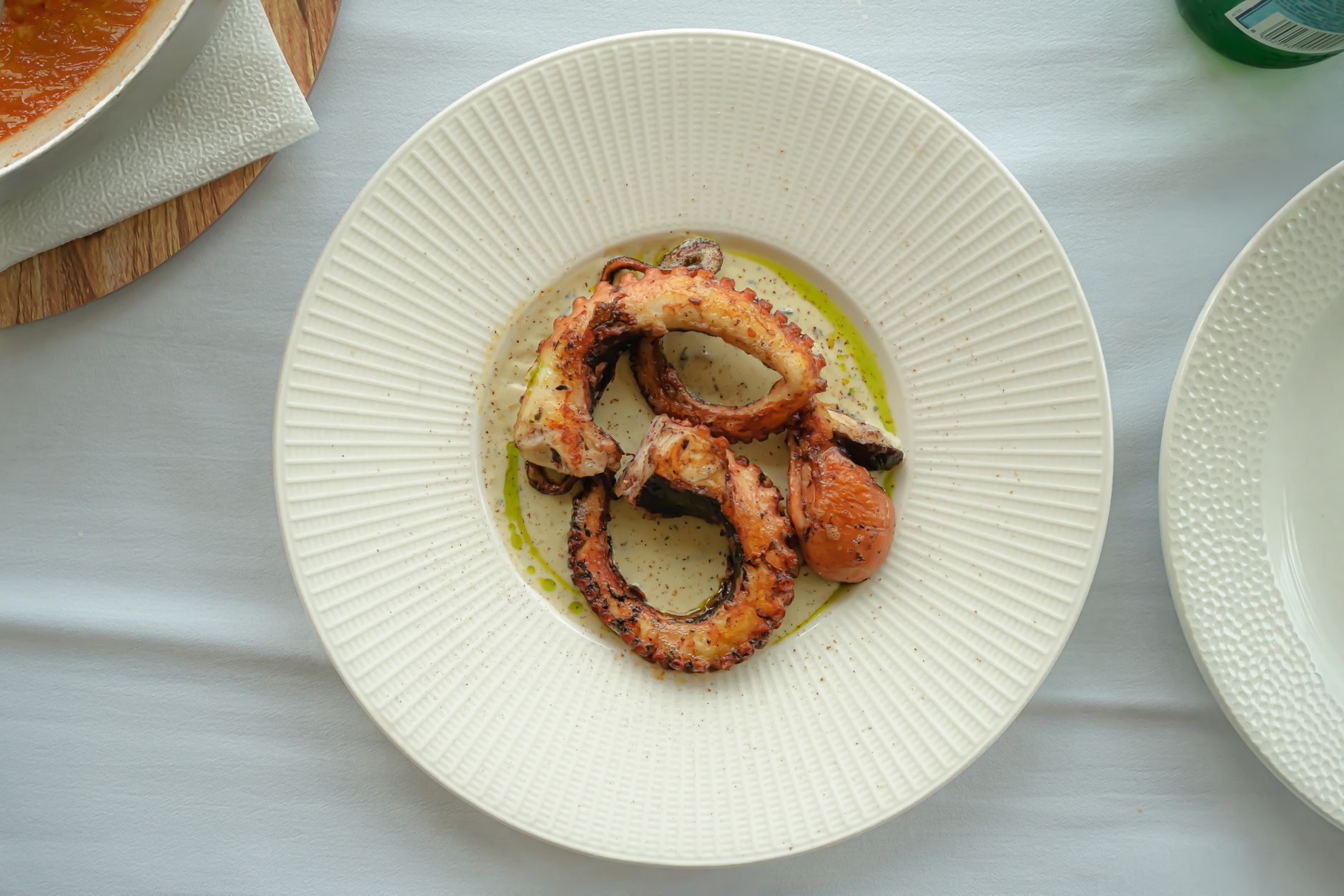
First rule: a menu with photographs and eight languages is a warning. Second: a restaurant with a man outside calling you in ("my friend, best fish!") does not have enough guests who came of their own accord. Third: the closer to the ferry harbour, the worse the ratio of price to food. In Igoumenitsa, grilled octopus on the quay runs 18 to 22 euro. Three streets inland it is 12 to 14, and it is better.
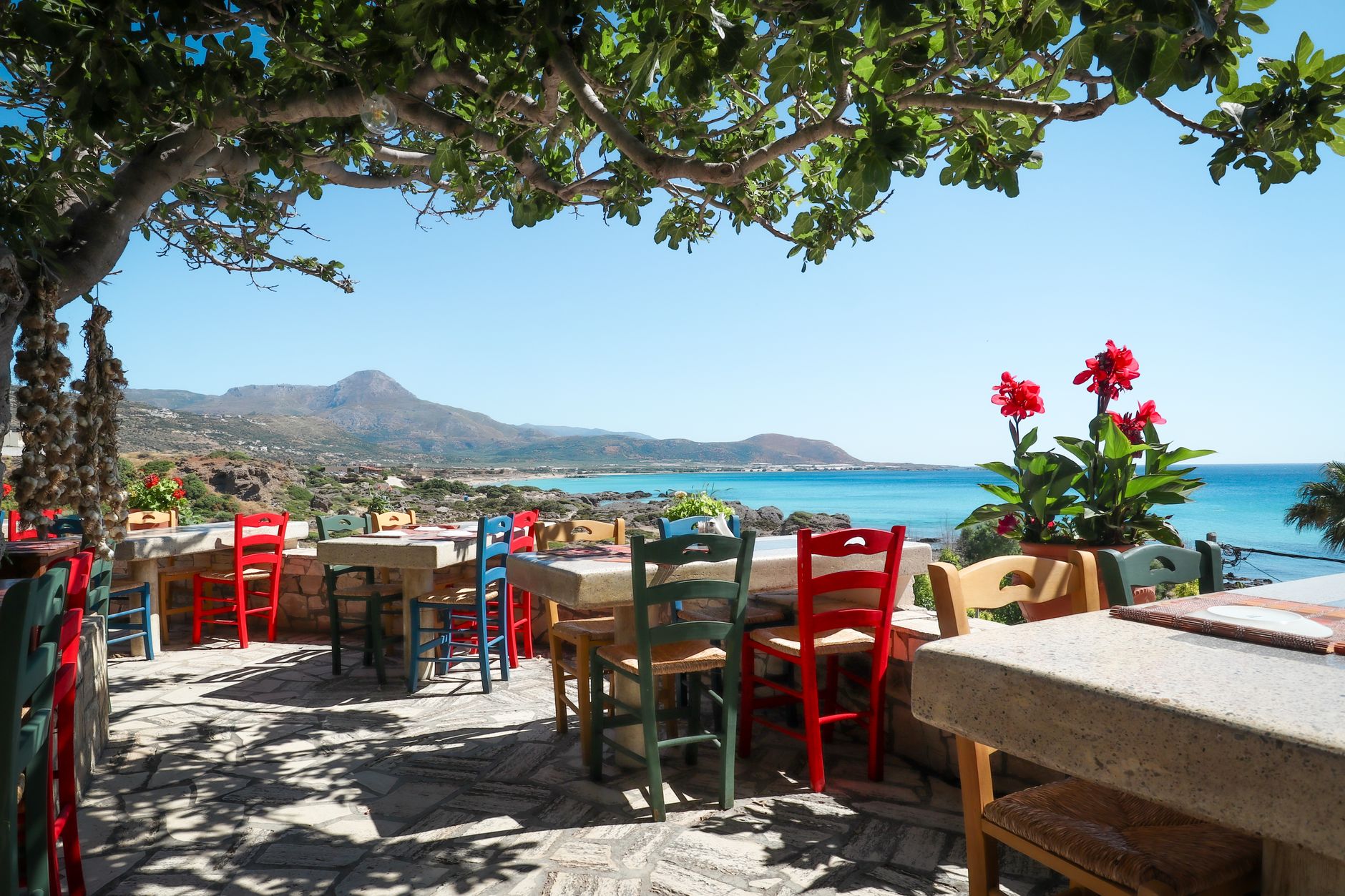
Mild good signs: a short menu, prices written by hand, older local couples at the tables, and an offer to come and look at the kitchen. Warning signs: photos, laminated menus, pizza and gyros and spaghetti on the same page.
If everything is on the menu, the kitchen knows nothing. A fishermen's taverna has six dishes and that is the whole list.
Mezedes, ouzo, and why dinner starts so late
Mezedes are small plates placed in the middle of the table and eaten together. It is not a starter course, it is the shape of the whole meal. For four people I order six or seven plates: tzatziki, fava, octopus, saganaki, horta, small fried gavros and bread. That comes to 12 to 16 euro a head including a carafe of wine. Those are honest prices outside Santorini and Mykonos, where the laws of physics differ.
Ouzo is anise spirit and it is not a shot. Pour it, add ice and water, watch it turn white, and drink it slowly alongside food. Do not drink it on its own. It is treacherous, and the next morning the switchbacks in the minibus will not amuse you. I speak from a 2019 experience my colleagues still bring up.
Then there is timing. Greeks have lunch between two and four and dinner from nine. Sit down at six and the kitchen will feed you, but you will share the room with two Germans and nobody else. I push our groups to at least half past eight. Not to play at being local, but because that is when the food is freshest and the taverna finally has the atmosphere you effectively paid airfare for.
Numbers worth knowing
- Greek coffee or a frappe: 2 to 3.50 euro. Water usually comes free with it.
- Half-litre carafe of house wine: 4 to 6 euro. Rarely bad, never Santorini Assyrtiko.
- Main course in an ordinary taverna: 9 to 14 euro. Fish is sold by weight and can hit 60 euro a kilo — always ask the price per kilo before you nod.
- Tipping: round up, five percent is plenty. Nobody expects fifteen.
One honest drawback: if you dislike vegetables in oil and want your food hot and crisp, a good part of Greek cooking will disappoint you. Ladera are lukewarm and oily on purpose. My advice is to try them twice before retreating to the grill.
On our tours through Epirus and the Peloponnese we order together on the first evening and I walk through the menu line by line. There is nothing noble about it — I simply cannot watch someone travel a thousand kilometres and then eat what they could have had at home. If that sounds like your kind of trip, look at our Greek departures, or just write to me. I am happy to help people going on their own too.